Javascript: Prototypes
💻Programming Language
javascript
Only getting a property considers the complete prototype chain of an object. Setting and deleting ignores inheritance and affects only own properties.
(from this excerpt out of the book SpeakingJS)
Create an object with properties of a prototype
Given the object
var PersonProto = {
  describe: function() {
    return 'Person named ' + this.name
  },
}
Create a new object with property describe inherited from prototype PersonProto and property name as an own property:
var jane = Object.create(PersonProto)
jane.name = 'Jane'
or less common:
var jane = Object.create(PersonProto, {
  name: { value: 'Jane', writable: true },
})
Here creating an object B where it’s properties are all inherited from A:
var A = {}
var B = Object.create(A)
Generic Methods: Borrowing Methods from Prototypes
Call it like so
Object.prototype.hasOwnProperty.call(obj, 'foo')or shorter like so
{}.hasOwnProperty.call(obj, 'foo') // shorterProperty Attributes and Property Descriptors
Properties can be added via descriptors
Object.create(proto, propDescObj?)Constructors & Instances —> Creating prototypes
By convention, the names of constructors start with uppercase letters
function Person(name) {
  this.name = name
}

Person.prototype.describe = function() {
  return 'Person named ' + this.name
}

var jane = new Person('Jane')
jane.describe() // 'Person named Jane'
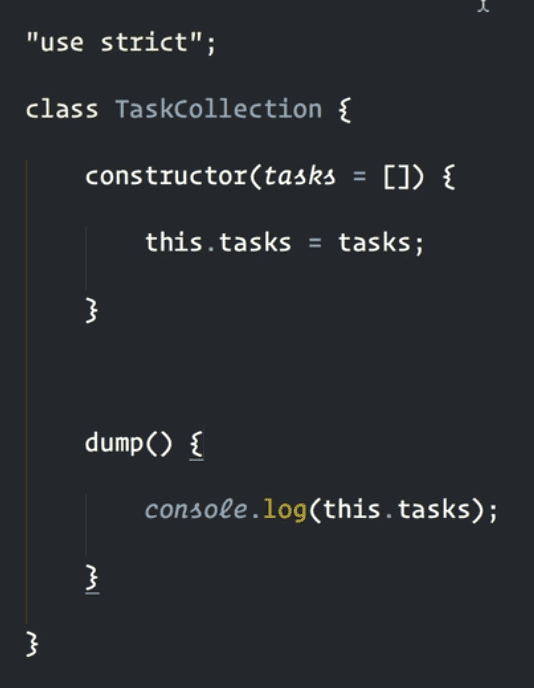
With ES6+ syntax Class is shortcut for setting prototype.
-
ES6
-
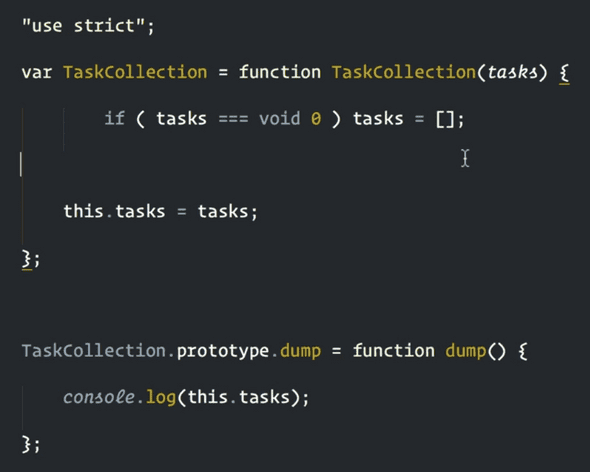
is compiled to:
Example
"use strict";

// ES6
class TaskCollection1 {
    constructor(tasks = []) {
        this.tasks = tasks;
    }

    dump() {
        console.log(this.tasks);
    }
}

// Legacy syntax
var TaskCollection2 = function TaskCollection(tasks) {
    if (tasks === void 0) tasks = [];
    this.tasks = tasks;
};

TaskCollection2.prototype.dump = function dump() {
    console.log(this.tasks);
}
Discuss on Twitter ● Improve this article: Edit on GitHub